Recovery Guides

What to Do After Being Scammed Online

Learn what to do immediately after an online scam, including stopping further payments, securing accounts, preserving evidence, contacting financial providers, reporting fraud, and preparing for possible recovery.

Recovery GuidesA few minutes readImmediate Action & RecoveryUpdated guidance
pattern-marketplace.webp
Topic
Recovery Guides
Reading time
A few minutes read
Content type
Immediate Action & Recovery
Review status
Reviewed for Accuracy

Important notice

  • Stop sending money as soon as you suspect that you have been scammed.
  • Preserve transaction records, messages, account details, websites, and other evidence before deleting or blocking contacts.
  • Contact the bank, card issuer, payment provider, or cryptocurrency platform involved as quickly as possible.
  • Secure any accounts, passwords, devices, or identity information that may have been compromised.
  • No recovery outcome can be guaranteed, and available options depend on the payment method, evidence, timing, jurisdiction, and individual circumstances.

What to Do First After Discovering a Scam

Discovering that you may have been scammed can create urgency and confusion. The first priority is to prevent additional losses while preserving enough information to understand what happened.

  • Stop making additional payments
  • Do not pay new taxes, verification fees, release charges, or withdrawal fees
  • Preserve messages and transaction records
  • Contact the financial or payment provider involved
  • Secure compromised accounts and devices
  • Record important dates, amounts, and account information

Stop Further Payments

Fraudsters frequently continue requesting money after the initial loss. They may claim that another payment is necessary to release funds, pay taxes, verify an account, complete a withdrawal, recover previous losses, or avoid legal consequences.

  • Do not make additional deposits
  • Do not pay supposed withdrawal fees
  • Do not pay unexpected taxes directly to the scammer or platform
  • Do not pay account activation or verification fees
  • Do not borrow money simply to satisfy another payment demand
  • Do not transfer funds to a new account because the scammer claims the previous account has a problem

Preserve Fraud Evidence

Save the available evidence before websites, profiles, accounts, advertisements, or conversations disappear. Evidence can help financial institutions, regulators, law-enforcement agencies, and professional advisers understand the transaction history and circumstances.

  • Emails and chat history
  • Phone numbers and usernames
  • Social media profiles
  • Website URLs
  • Account dashboards
  • Contracts and invoices
  • Bank transfer receipts
  • Card transaction records
  • Wallet addresses and cryptocurrency transaction hashes
  • Screenshots of balances, withdrawals, and payment instructions
  • Names and company details used by the suspected scammer

Whenever possible, keep original files and transaction records rather than relying exclusively on screenshots.

Contact the Bank or Payment Provider

If money has already been transferred, contact the financial institution or payment provider involved as soon as possible. Different payment methods have different dispute, recall, reversal, tracing, or fraud investigation procedures.

  • Bank or wire transfer: report the suspected fraud and ask what recall or tracing procedures may be available
  • Credit or debit card: ask about fraudulent transaction or charge dispute procedures
  • Payment app or e-wallet: report the transaction to the service provider
  • Cryptocurrency exchange: report the transaction and destination wallet if the exchange offers fraud reporting support
  • Gift card: contact the card issuer and retain the card and receipt
  • Other payment methods: contact the company used to send the funds and ask what fraud procedures are available

Secure Compromised Accounts

If the scammer obtained login credentials, authentication codes, personal information, or access to a computer or mobile device, financial recovery should not be the only concern. Preventing additional account compromise is also important.

  • Change compromised passwords
  • Change passwords reused on other accounts
  • Enable multi-factor authentication where available
  • Review active account sessions and devices
  • Remove unknown devices or applications
  • Review banking and payment accounts for unfamiliar activity
  • Contact the relevant provider if an account has been taken over
  • Run appropriate security checks if remote access or malicious software may have been involved

If You Sent Cryptocurrency

Cryptocurrency transactions usually cannot be reversed in the same way as many traditional payment transactions. However, transaction evidence can still be important for reporting, exchange notifications, blockchain analysis, and professional assessment.

  • Save every destination wallet address
  • Save transaction hashes or transaction IDs
  • Record the cryptocurrency type and amount
  • Download exchange deposit and withdrawal history
  • Preserve screenshots and communications showing who provided the wallet address
  • Report suspicious activity to the relevant exchange where appropriate
  • Do not share private keys or recovery phrases

The existence of a visible blockchain transaction does not by itself mean that funds can be recovered. Recovery possibilities depend on the transaction path, counterparties, exchanges, jurisdiction, and other circumstances.

Report the Fraud

Reporting creates an official record and may provide information to law-enforcement agencies, regulators, financial institutions, consumer protection authorities, or online platforms.

  • Report the incident through the appropriate official fraud or cybercrime channel
  • Report financial-services or investment misconduct to the relevant regulator where appropriate
  • Report fraudulent accounts or profiles to the platform involved
  • Report suspicious transactions separately to the relevant financial provider
  • Save report numbers and confirmation emails

Create a Complete Case File

Organizing the case into a clear file can make later communication with banks, regulators, law-enforcement agencies, lawyers, or other professionals more efficient.

  • A short summary of what happened
  • Chronological timeline of events
  • Total amount lost
  • List of each transaction
  • Payment methods used
  • Beneficiary account information
  • Wallet addresses and transaction hashes
  • Scammer contact details and profiles
  • Websites and platform information
  • Copies of reports already filed
  • Supporting screenshots, documents, and communications

Evaluate Possible Recovery Options

Recovery options vary significantly between cases. A fraudulent card transaction, bank transfer, cryptocurrency transfer, fake investment platform, and cross-border fraud case may each require different approaches.

Important factors include the payment method, timing, transaction destination, available evidence, financial institutions involved, whether accounts can be identified, jurisdiction, and the legal or regulatory framework that applies.

When Professional Assistance May Be Useful

Professional assistance may be useful when losses are substantial, transactions are complex, multiple jurisdictions are involved, financial institutions have disputed responsibility, or legal action may need to be considered.

  • Verify the identity of the professional
  • Verify any claimed professional license
  • Understand the services being offered
  • Request clear information about fees
  • Be cautious of guaranteed outcomes
  • Do not provide account passwords or security credentials

GFKC provides informational and case-support resources and does not guarantee recovery outcomes.

A Practical First 24-Hour Action Plan

  • Stop all additional payments
  • Save the complete communication history
  • Download transaction records
  • Contact the financial or payment provider
  • Change compromised passwords
  • Secure affected accounts
  • Record wallet addresses and transaction hashes
  • Report fraudulent accounts or websites where appropriate
  • Create a basic timeline of events
  • Store evidence securely in more than one location

Checklist

Evidence checklist

Use this checklist to organize the immediate actions that may be necessary after discovering an online scam.

Stop Further Losses

  • Stop additional payments
  • Do not pay withdrawal or release fees
  • Do not follow new payment instructions from the suspected scammer
  • Do not borrow additional money to satisfy scam demands

Preserve Evidence

  • Save messages and emails
  • Save transaction receipts
  • Record website URLs and profiles
  • Save bank and payment records
  • Record wallet addresses and transaction hashes

Protect Your Accounts

  • Change compromised passwords
  • Enable multi-factor authentication
  • Review active devices and sessions
  • Check financial accounts for unfamiliar activity
  • Remove unauthorized access where possible

Contact Financial Providers

  • Contact the bank or card issuer
  • Contact the payment provider
  • Notify the cryptocurrency exchange where relevant
  • Ask about available fraud or dispute procedures
  • Keep all case and reference numbers

Prepare the Case

  • Write a chronological timeline
  • Calculate the total amount lost
  • List every payment
  • Organize supporting documents
  • Keep copies of reports and correspondence
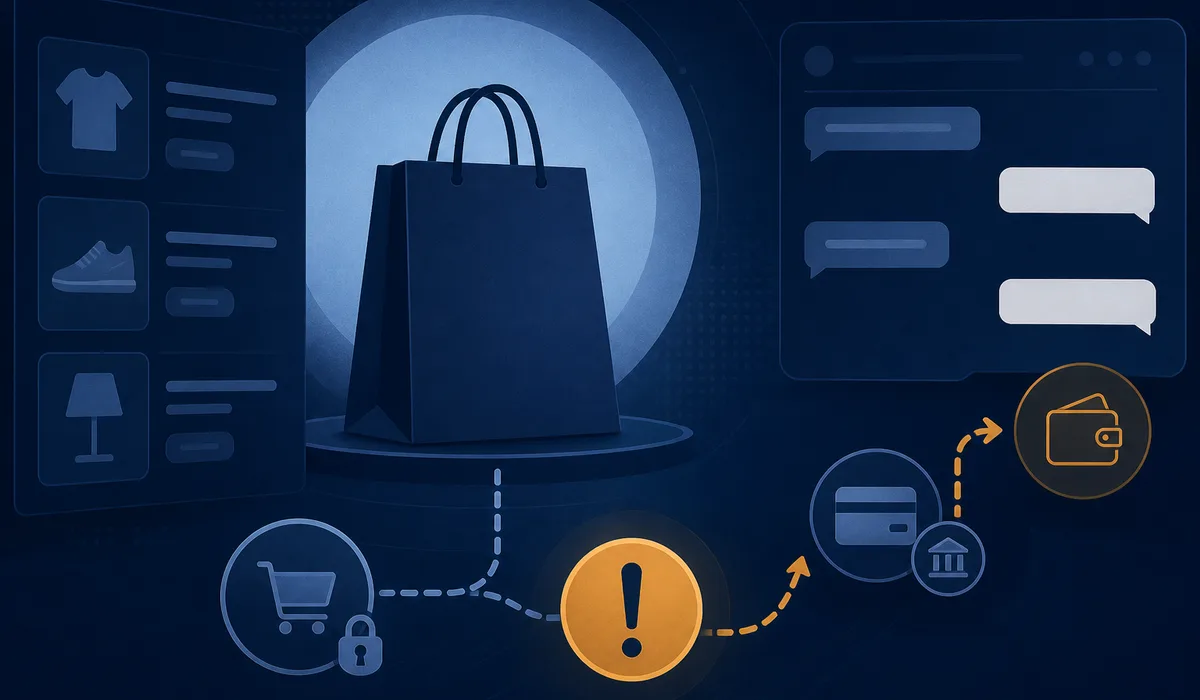
Editorial illustration for What to Do After Being Scammed Online checklist

Pitfalls

Common mistakes

Practical missteps that can weaken records or create new risk after suspected fraud.

Sending More Money to Recover Existing Funds

Fraudsters may claim that another payment is required to release, verify, unlock, or recover money that has already been sent.

Avoid:Do not assume that another fee will make previously lost funds available.

Better approach:Stop further payments and independently verify the situation before taking additional financial action.

Deleting Evidence Immediately

Blocking a scammer may be appropriate, but deleting the conversation first can remove useful evidence.

Avoid:Do not delete messages, emails, profiles, receipts, or account records before preserving them.

Better approach:Save the evidence first, secure your accounts, and then block suspicious contacts when appropriate.

Waiting Too Long to Contact the Bank

Some victims wait for the scammer to respond or return the funds before contacting their financial provider.

Avoid:Do not delay reporting a suspicious payment solely because the scammer promises a refund.

Better approach:Contact the relevant bank or payment provider promptly and ask what procedures may be available.

Sharing Security Credentials

Victims seeking assistance may accidentally disclose passwords, authentication codes, private keys, or wallet recovery phrases.

Avoid:Never provide credentials that allow someone else to access your financial or cryptocurrency accounts.

Better approach:Provide transaction evidence without sharing passwords, seed phrases, private keys, or one-time security codes.

Expecting a Guaranteed Recovery

Recovery depends on many factors and cannot be reliably promised before the facts and transaction history are reviewed.

Avoid:Do not rely on anyone who guarantees a specific recovery result.

Better approach:Evaluate recovery options based on evidence, payment method, timing, institutions involved, and applicable jurisdiction.

Channels

Official sources and channels

These official resources provide general guidance on immediate actions, payment-provider contact, evidence preservation, account security, and fraud reporting.

External source

Fraud Reporting Guidance

Guidance on contacting banks and payment providers, securing compromised information, and reporting scams.

Federal Trade Commission · Accessed 2026-08-08

External source

Internet Crime Complaint Center FAQ

Information about filing cyber-enabled crime complaints and preserving original evidence that may support a report.

FBI Internet Crime Complaint Center · Accessed 2026-08-08

Official procedures vary by country, payment method, institution, and type of fraud. Always verify the current reporting and dispute process directly with the relevant authority, bank, payment provider, exchange, or platform.

Related Patterns

Related scam types

Fraud patterns where evidence preservation is often especially important.

Related Guides

Related knowledge

Additional practical articles that may help after suspicious online contact.

Practical Guide

How to Preserve Evidence After an Online Scam

Learn how to preserve messages, payment records, account details, transaction data, and other important evidence after an online scam.

6 min read

Read article

Practical Guide

Can Scam Money Be Recovered?

Learn when scam losses may be recoverable, which factors affect recovery, how payment methods change available options, and what evidence victims should prepare before seeking help.

A few minutes read

Read article

Practical Guide

How Long Does Fraud Recovery Take?

Learn how long fraud recovery may take, which factors affect the timeline, why bank transfers, card disputes, cryptocurrency cases, and cross-border fraud follow different processes, and how victims can prepare efficiently.

11 min read

Read article

FAQ

Evidence preservation FAQ

Cautious answers about screenshots, messaging and recovery expectations.

Confidential Case Review

Ready to submit your case for recovery review?

Read related guides or submit your case for confidential assessment. Do not send passwords, authentication codes or full banking card details.

Submitting a request does not create an attorney-client relationship and does not guarantee representation, recovery, or any specific outcome.